Monday, July 30, 2018

RECIPE: Pickled Chard Stems

Chard stems (leaves removed)
½ cup water
1 cup vinegar (any kind will do, I like a combo of white wine and apple cider)
3 tablespoons salt
2 tablespoons sugar
2 smashed garlic cloves
1-3 teaspoons seasoning of your choice (what flavor do you want? Red pepper flakes create a spicier pickle, rosemary, thyme, and caraway seeds, mustard seeds are also good here, but you can be as creative as you want!)

Blanch the chard stems in a pot of boiling water for about 1 minutes.  Drain the stems and place them in ice water to stop them from cooking any more!

Add all ingredients to a small pan and bring to a boil (you want the sugar to dissolve!).

Pack the chard stems tightly in a jar, Tupperware, or whatever container you have that has a tightly fitting lid.  Let your liquid cool for about a minute and then pour over the packed stems. Let the stems brine for a few hours in the fridge before eating.  They will keep for a week or two!

Wednesday, July 25, 2018

RECIPE: Kohlrabi Slaw

Ingredients:

  • - Apple, cut into matchsticks
    - Olive oil
    - Fresh lemon juice
    - Salt and pepper

Wednesday, July 18, 2018

TIPS: Sage

Preservation:
Note from Megan: I have been using http://www.preservingyourharvest.com for years to save specific food that I can only get rarely.  Here's what they say (in my own words) about preserving sage.

How to air-dry sage:

Poke a few holes in a paper bag.   Place the sage into the bag so the stems are sticking out of the opening.  Close the opening and the stems together with a rubber band and hang stems-side up anywhere in your house.

How to oven-dry sage:

Put oven on lowest temperature.  Place washed and dried sage leaves on a baking sheet and place in oven for 2-4 hours, or until they crumble in your hands.  Store in an airtight container after they are completely cool.

How to freeze sage:

Chop up cleaned and dried leaves as small as you can.  Put 1 teaspoon into each icecube section of your icecube tray.  Top off with a little water and freeze.  Use in sauces or allow to melt and use only the leaves later.

Other tips:  Always use sage cooked, and add to the end of the cooking process. If roasting a chicken, add sage and lemon inside the cavity.  Sautee or steam carrots, then add a little butter and sage and cook until golden.

RECIPE: Delicious Weeknight Brown Butter Sage Pasta

Optionally:
- Add 1 cup of Parmesan cheese at the end of cooking
- 1 chopped onion and/or 3-4 smashed/chopped cloves of garlic can be cooked with the butter in the first step

Ingredients:
- One bunch sage - 20-30 leaves, washed and stemmed
- 4 Tablespoons butter
- 1 pound pasta

Cook pasta according to package directions BUT: drain the pasta 2 minutes before it’s done and reserve one cup of cooking water before draining.

Meanwhile, in a large saucepan on medium-high heat, melt the butter.  (If adding onion and garlic, do so now and cook them down before adding the sage.)

When the butter is done frothing, add the sage and cook until butter is light brown and the sage is wilted.  Add the cooked pasta and 3/4 of the reserved pasta water. Cook for a few minutes until the pasta is done. (Add Parmesan cheese now, if using.)  Add the rest of the water if necessary.

Season with salt and pepper and eat while hot.

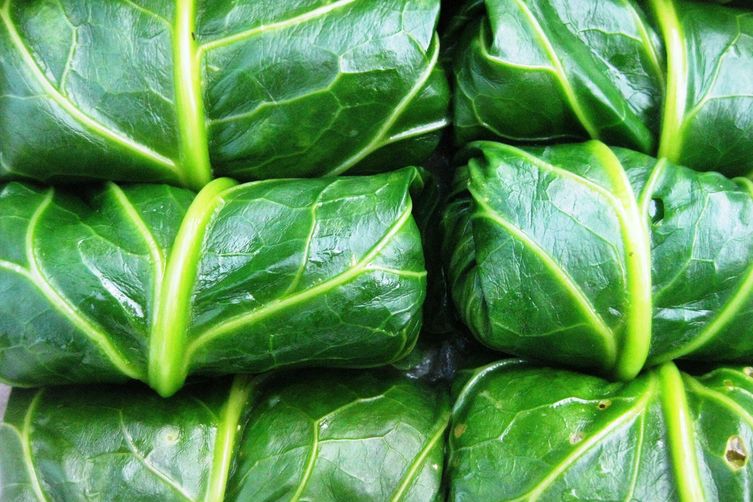
RECIPE: Stuffed Collards

Note: We made this recipe -recently and it was delicious - we used turkey sausage. You could easily use a non-meat filling with the rice as well. They are like stuffed peppers but the collard greens stay beautifully and they are easy to work with once blanched. The only problem is that the recipe takes an hour to cook - which can be painful during this summer heat when people in NYC try not to turn on their ovens (as least that is what happens in our house. We made enough to put some in the freezer as well. 

Makes: 16

16           collard leaves or halves, a little bigger than hand size
1 1/2 cups cooked white rice
1/2         pound ground pork
1/2         cup diced onion
1/2         cup diced celery
1/2         cup diced green bell pepper
2              teaspoons of your favorite creole seasoning
1              egg, lightly beaten
1/4         cup chicken broth

Blanch the collard leaves in boiling water for about one minute. Rinse, cool and pat dry. Brown the ground pork in a saute pan, breaking it up with a wooden spoon as you go until it loses its pink color. Add the onion, celery, bell pepper and creole seasoning to the pork and continue to saute until the vegetables soften a bit. Cool the mixture to room temperature. Once the mixture has cooled, stir in the cooked rice and beaten egg. Place about 2 (coffee) teaspoons of the mixture just above the base of the collard leaf. Roll up the bottom, tuck in the sides and roll the rest of the way. Repeat for the remaining leaves and place in a shallow baking dish. If you have extra filling, just sprinkle it over the top of the rolls. Pour the quarter cup of broth over the casserole, cover tightly and bake at 350F for about 1 hour. Serve warm or at room temperature.


Stuffed Collards

Tuesday, July 17, 2018

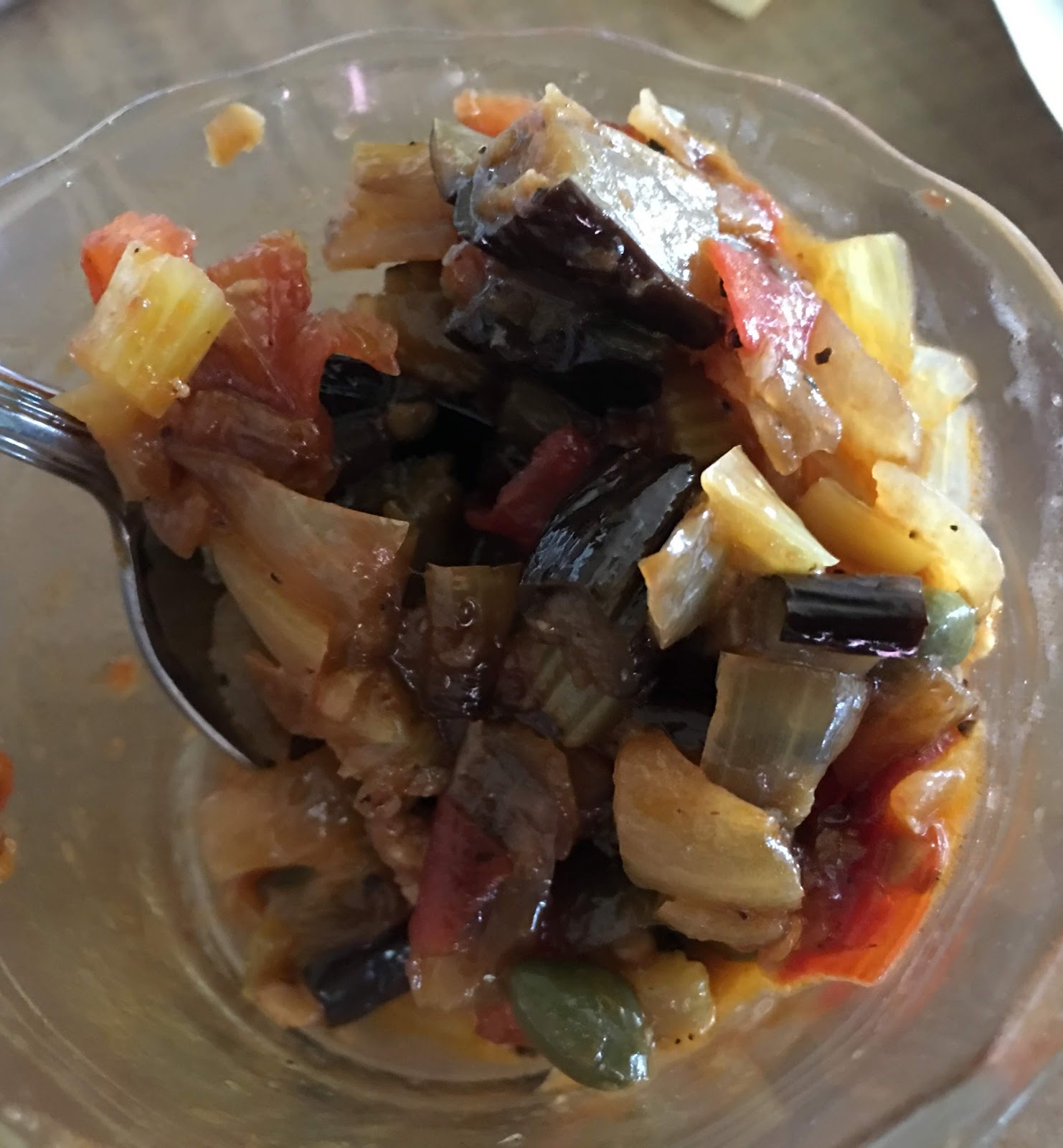
RECIPE: Eggplant Caponata

From https://www.bonappetit.com/recipe/caponata This is a delicious and complex dish, sure to impress! Ingredients 1-2 small eggplant, cut into 1-inch pieces\ 4 Tablespoons olive oil (2T / 2T, see below) 1 large onion, chopped 1 celery stalk, chopped ¼ cup chopped green olives 2 teaspoons capers 1 large tomato, chopped 2 tablespoons red wine vinegar ½ teaspoon sugar Recipe Preheat oven to 400.  Coat eggplant with 2T olive oil, salt and pepper, and spread evenly on a baking sheet.  Roast, stirring at least once to prevent burning, in oven until brown, up to 30 minutes. Meanwhile on the stovetop, heat a large pan over medium-high heat.  Add 2T olive oil, and when oil is hot, add the onions, celery, olives and capers, salt and pepper, and cook slowly for 15 minutes.  Add ½ cup water, the sugar, and the vinegar and bring to boil then reduce to simmer until half of the liquid is gone, about 5 minutes.   Add the eggplant to the onion mixture and stir well.


RECIPE: Pasta with eggplant, sundried tomato, and goat cheese

A fun summer pasta dish that comes together quickly for a weeknight dinner!

1 eggplant
1 jar sundried tomato packed in oil
Goat cheese
1 box pasta (rigatoni is my favorite shape here)

Preheat your oven to 350 degrees.

Cut eggplant into 1-inch thick rounds and sprinkle with salt.  Let sit for 15 or so minutes… after 15 minutes, the eggplants will have sweat out some liquid.  Dry the liquid off and cut the rounds into small cubes. Place the cubes on a baking sheet and give a little spray of olive oil (if you have Pam or an expeller) or drizzle of olive oil.  Bake until golden brown, or about 20-30 minutes.

While the eggplant is baking, put the jar of sundried tomatoes, including the oil, in the food processor and pulse into a paste, adding additional olive oil if needed (I don’t usually need to add too much).

Bring a pot of well-salted water to a boil and cook pasta until al dente (2-3 minutes less than the package calls for).  Reserve pasta water!

Heat up your sundried tomato paste in a skillet, and add pasta and about ¼ to ½ cup of pasta water (to start). The pasta will finish cooking in the sauce!

Add the eggplant to the pasta and the sauce.  Finish in the bowl with dollops of goat cheese (you can also mix this in for a creamier sauce).